
Cold Palaces, Hot Tension
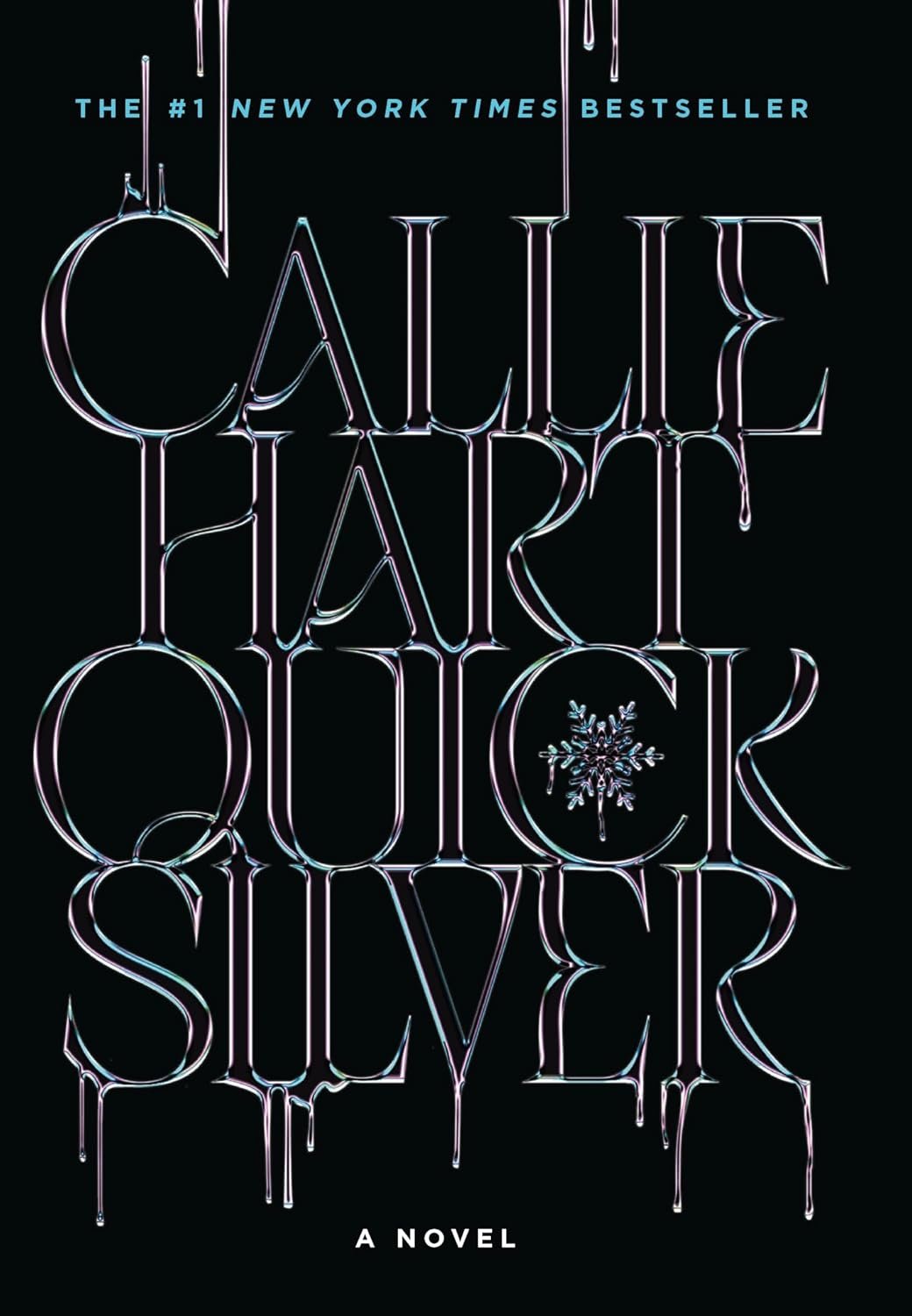
Chapters 7-12
Check out the playlist that I think fit the Quicksilver vibe
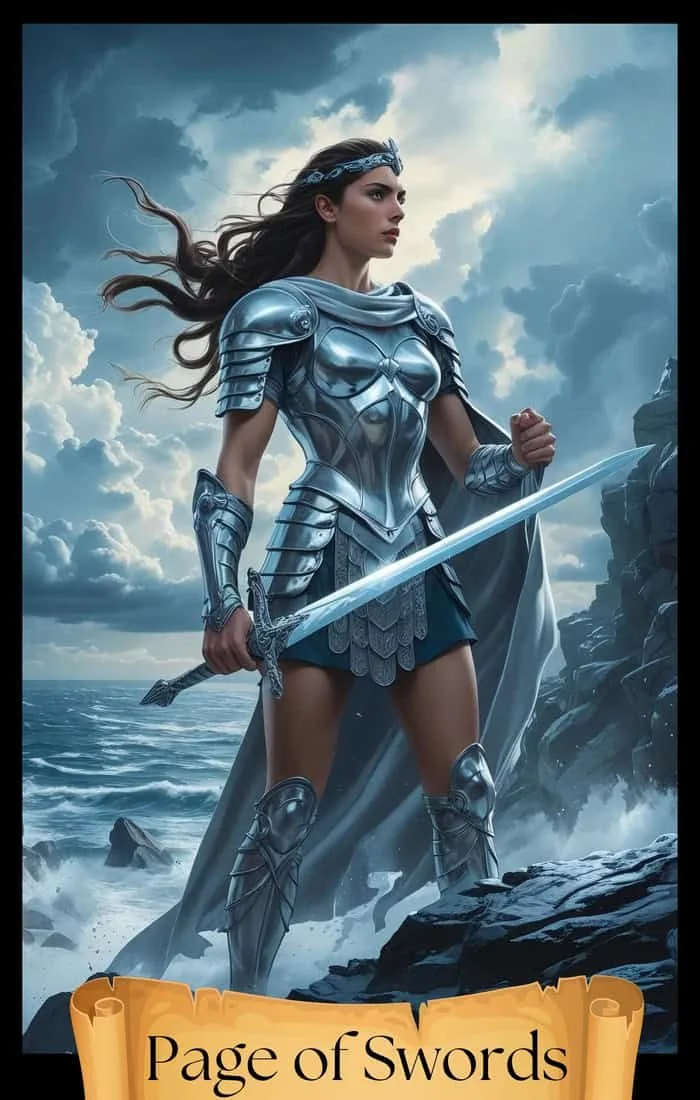
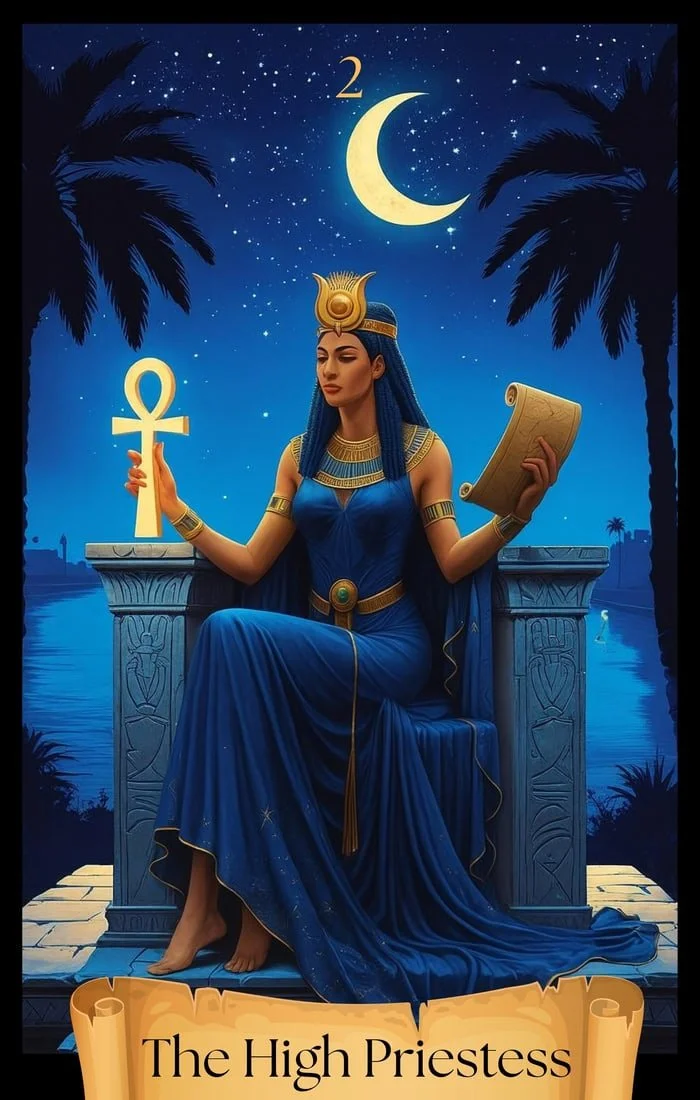
Tarot Cards of the Day: The High Priestess & Page of Swords
Before we even get into the chaos, the court politics, or the “OMG he’s hot” moments, I pulled two cards for today — and honestly, they couldn’t fit these chapters better. The High Priestess brings that deep, intuitive, “there’s more going on here” energy that absolutely matches the vibe of Yvelia. Secrets everywhere. Half‑truths. You know they’re hiding knives behind their backs.
And then there’s the Page of Swords, which is basically Saeris in card form right now. Curious. Sharp. Asking questions she probably shouldn’t ask. Learning fast. Poking at things (and people… looking at you, Kingfisher) just to see what happens. It’s that restless, hungry‑for‑answers energy that pushes her deeper into alchemy, deeper into the court’s mess, and deeper into her own identity.
Together, these cards set the perfect tone for today’s chapters:
Trust your instincts. Stay curious. And don’t be afraid to dig beneath the surface — even if what you find changes everything.
Buckle up book besties. There’s a lot to get through today.
The Dog
Stepping into Yvelia feels like stepping into an entirely different universe, and it is. Gone are Zilvaren’s warm earth tones, its relentless suns, its heat that wraps around you like a too‑tight hug. Yvelia is all cool jewel tones, crisp air, and a sun that behaves like it has manners. There’s actual night here. Actual day. Actual temperature regulation. Saeris is freezing, and as someone who lives in Arizona, I felt that in my bones. Everlayne calling her dramatic for wanting another layer? Rude. Accurate. Hilarious. We also get our first real cultural contrast: different gods, different histories, different lies. Everlayne casually mentions that Madra knows exactly who these gods are and let time erase them anyway. That one line says more about Madra’s corruption than any villain monologue ever could.
Then we enter the grand hall of the Yvelian Court, and wow. Fifty rows of fae on each side, hundreds of eyes watching. The dais is made of labradorite—and no, you were not alone in Googling it. That stone is stunning. Iridescent, shifting, otherworldly. A perfect metaphor for a court built on beauty and danger.
And then… the dragon skull.
Omnamshacry.
The fact that it’s in the pronunciation guide tells me this is not just set dressing. This skull is going to matter.
We finally meet King Belikon, and he radiates “do not test me” energy. He’s holding the godsword Saeris pulled from the Hall of Mirrors—but only with a leather glove. He can’t touch it bare‑handed? That’s… interesting. Another tally mark in the “Saeris is not what she thinks she is” column.
Saeris, being Saeris, shows minimal respect to the court. Belikon forgives her—for now—and assigns her two tasks:
1. Learn the rules of Yvelia.
2. Repay the kingdom for saving her life.
(That second one feels like a trap wrapped in a favor wrapped in a threat.)
Then comes the line that made me sit up straight:
The fae are praying that a holy position hasn’t fallen to “such unholy blood.”
Translation: They think humans are beneath them.
Translation of the translation: Saeris’s parentage is absolutely not what we’ve been told.
Belikon challenges her to awaken the quicksilver and reopen the pathways between worlds. No pressure.
And then he summons “the dog.”
Death himself.
Rabid.
Kingfisher.
Belikon immediately calls for his head, which tells you everything about their relationship. But Malwae, the Oracle, steps in with a prophecy:
The Kingfisher will not die by Belikon’s hand, and he will return the pendant.
The gods must be obeyed.
House De Barra will fall if they aren’t.
Belikon does not take that well.
Renfis, the general, suggests sending Kingfisher back to the front lines because apparently that’s where you put the weapon you don’t respect but can’t kill. Once the pendant is placed on him, Kingfisher begins to calm. And then he’s assigned to help Saeris with her task. He has one week.
Saeris finally gets a good look at him, and of course he’s beautiful. Jade green eyes, silver filaments forming a metallic corona around his pupil. Another otherworldly green‑eyed man.
Everlayne ends the chapter with a warning:
The fae are notorious two‑faced backstabbers. I want to know who exactly she’s talking about.
Alchemist
Walking past a window, Saeris is hit with her first real look at Yvelia and she’s shook. Mountains. Forests. Snow. Actual cold. After the furnace‑blast climate of Zilvaren, this place feels like stepping into a different genre entirely. And the fae? They’re not exactly rolling out a welcome mat. More like rolling their eyes.
We get a small but important piece of Saeris’s past:
Her mother was a librarian.
Which… raises questions. Because in the Third, literacy isn’t exactly common. A podcast (Book Club After Dark) pointed out that Saeris reads like someone who was taught by someone who really knew how to read. That implies a higher social status than we’ve been led to believe. Another breadcrumb in the “Saeris’s parentage is sus” trail. I dropped the link to their linktree. Check them out.
Then we meet Rusarius, the Winter Palace librarian. The library itself sounds like a dream—towering shelves, ancient tomes, knowledge humming in the air. Rusarius is polite, helpful… and yet something about him feels slightly off. Not sinister, just… unreadable. Which, in a fae court, is its own kind of warning.
Meanwhile, the political tension around Kingfisher thickens. Belikon has assassins shadowing him? Why does the king hate him so much? Why does he want him dead so badly? The weight of that animosity is visible in Kingfisher’s armor: fully suited, sword strapped to his back, every inch of him prepared for violence.
His sword, Nimerelle, was forged by alchemists. The one Saeris pulled from the quicksilver, is named Solace—the same blade Madra used to seal the pathways between worlds. These weapons aren’t just weapons. They’re history. They’re keys.
Kingfisher is convinced Saeris is an alchemist. The others aren’t so sure. But he sees something in her; something that makes sense to him.
He also drops a line that made me pause: Belikon could chew his way through another realm. There’s more to this. A story we haven’t been told yet.
Then Kingfisher asks Saeris if she’s ever channeled metal energy before or worked a forge. And that? That lights her up. You can feel her curiosity spark. This is the first moment where she’s not just reacting to Yvelia, she’s engaging with it.
This chapter is quieter than the last, but it’s full of foreshadowing, political tension, and identity clues. The world of Quicksilver is widening, and I think I’m going to like it here.
Righteous Purpose
The chapter opens with chaos: everyone arguing about how to teach Saeris to activate the quicksilver when—plot twist—no one actually knows how. The alchemists of old apparently didn’t write anything down. Which raises the real question: Was the knowledge lost… or stolen… or hoarded by someone we haven’t met yet? Because in fantasy, “we don’t know” is almost always code for “someone knows and they’re evil.”
Kingfisher gives Saeris the crash course on Yvelia’s history, and it’s a lot.
Humans used to be everywhere.
The fae used to drink human blood because of a curse. Vampire.
The curse is gone, but the fangs remain. Vampire.
Immortality once depended on blood. Vampire.
Is this going to turn into a vampire story???
And now Saeris is the only living human in Yvelia. No wonder Kingfisher keeps saying she isn’t safe.
Then Everlayne casually drops a bomb: She and Kingfisher are siblings.
The room freezes. Everyone reacts like she just said Voldemort’s real name.
And suddenly the questions multiply:
• They look nothing alike—light vs. dark—so are they half‑siblings
• If so, who’s the shared parent
• Why does Belikon hate Kingfisher so violently
• Is Kingfisher the product of an affair
• Is Belikon’s rage personal, political, or both
The way the group reacts tells us this is a taboo topic. A scandal. A wound.
And honestly? Kingfisher is becoming impossible not to love. He’s grumpy, sarcastic, cold on the surface but you can feel the tragic backstory simmering underneath. He’s the kind of character who’s been weaponized by his own kingdom and blamed for things he didn’t choose.
We also learn more about the quicksilver itself:
It’s volatile.
Possibly sentient.
Touching it with bare skin can drive you mad.
(Harron’s dagger being made of quicksilver suddenly feels a lot more ominous.)
Alchemists inherited their abilities, which makes Saeris’s existence even more suspicious. She’s human. She’s from a world where alchemists are heard of. What happened to the alchemists? Why did their line vanish?
Then Kingfisher reveals the story behind his pendant. His relic. A gift from his mother when he was eleven and it’s not the only one of its kind.
One of the strongest, but not the strongest. And the one thing that protects him from the quicksilver. He once traveled a pathway without it, the quicksilver took him.
A healer removed most of it…
But some remained.
In his eye.
That silver corona around his pupil?
It’s not aesthetic.
It’s trauma.
And then because this male is the ultimate shadow daddy, he cleans the forge with literal darkness. Just shadows sweeping the room clean. Meanwhile Saeris is furious because they spent hours scrubbing it by hand. Honestly? Fair.
This chapter deepens everything: the lore, the family drama, the political tension, the alchemical mystery. And Kingfisher keeps becoming more compelling, more tragic, more magnetic.
Crumbs
Saeris is convinced Everlayne is trying to help her… and maybe she is. But there’s something about Everlayne’s brand of helpfulness that feels a little too curated. A little too strategic. It’s giving “I’m being nice because it benefits me later.” And honestly? In a fae court, that’s practically a love language.
We also get another piece of the deeply suspicious De Barra family puzzle. Regardless of who their parents are, Everlayne and Kingfisher are siblings—which means Kingfisher is royal blood. Yet he has no rooms in the palace. No place to belong. And he’s been gone for 110 years. That’s not a normal estrangement. That’s exile energy.
Meanwhile, Saeris is finally clean, fed, and dressed in Everlayne’s frilly gowns which is hilarious because she is absolutely not a frills girl. She’s a “pants, boots, and a weapon” girl. Watching her get shoved into lace is comedy gold.
Then comes her first real lesson:
Alchemy is magic. Old magic. Dead magic. Forgotten magic.
And when the fae say something is old, they mean prehistoric. This isn’t “a few centuries ago.” This is “before your great‑great‑great‑great‑great grandmother’s grandmother was born.”
We learn there were three branches of alchemists:
1. Those who sought immortality
2. Those who created and invented through metal transmutation
3. Those who healed illness and disease
Saeris is clearly the second kind—the maker, the metal‑shaper, the one who can coax power out of ore. Which raises the question:
If alchemists are extinct… why is she here?
Saeris also asks a brilliant question:
How can she understand the language? How can she read it?
The answer: Madra.
And the language she’s been reading and speaking?
Common fae.
Which means Yvelia and Zilvaren has been connected far longer than she realizes.
We also get the ages of Everlayne and Kingfisher, and they’re wild:
• Everlayne: 1,486 years old, looks mid‑20s
• Kingfisher: 1,733 years old, looks mid‑30s
But here’s the important part: No matter how friendly Ren and Everlayne seem, they’re not actually telling Saeris anything. Every scrap of truth she gets is from eavesdropping. Kingfisher is the only one who promised her answers, but when she asks about the town he razed, he shuts down. Hard. He doesn’t think she has the emotional range to understand why he did it.
Then we get to the quicksilver lesson, and this part is so good. Saeris learns to listen to it—really listen. And she hears a single word:
Annorath Mor.
A name?
A place?
A command?
Whatever it is, it’s important. You can tell by Kingfisher’s reaction when she speaks it out loud.
Swallow
At this point, I’m convinced Everlayne is treating Saeris like a living doll. The gowns are gorgeous, yes—but Saeris hates them, and she’s not wrong. She’s a pants girl. A practical girl. A “please don’t put me in chiffon when I’m trying to survive” girl. And the kicker? Plenty of female fae wear pants. Everlayne just thinks Saeris is “too pretty” for them. That’s not a compliment. That’s control dressed up as fashion.
In the last chapter Saeris punches Kingfisher in the mouth. His reaction: “bad human” is comedy gold. The man is a lethal weapon wrapped in trauma and sarcasm, and she clocks him like he’s a training dummy. Iconic behavior.
But then the real bomb drops: Kingfisher and Everlayne’s parentage is revealed.
They share a mother. Their mother was married to a southern lord named Finran. Finran is Kingfisher’s father.
Finran was sent to Zilvaren when the quicksilver stilled and was trapped there. Belikon blamed him, declared him a traitor, and left him stranded there.
Less than a year later, Belikon forced an engagement on their mother under threat of treason.
So now we have:
• A coerced marriage
• A dead mother
• A king who hates the son who isn’t his
• A son who’s been exiled for 110 years
• A daughter who grew up in the palace while her brother was cast out
This family tree is a crime scene.
Then we get the moment the entire fandom collectively screamed over: Kingfisher can smell Saeris’s arousal. And he tells her. Casually. Like he’s commenting on the weather.
From this point forward, the sexual tension is no longer subtext. It’s text. It’s canon. It’s happening whether Saeris is ready or not. And the fact that Everlayne can smell Kingfisher’s night of whoring and drinking, and scolds him for it, is even funnier. But what makes this scene work is Kingfisher’s restraint. He doesn’t tease Saeris about it. He doesn’t weaponize it. He just… acknowledges it. And that makes it hotter.
The banter in this book is truly a masterclass. It’s sharp, it’s layered, it’s emotionally loaded, and it’s funny. Every exchange between Saeris and Kingfisher feels like foreplay disguised as hostility.
This chapter deepens the family tragedy, heightens the chemistry, and exposes the rot at the heart of the De Barra dynasty. And Saeris? She’s standing in the middle of it all, wearing a dress she hates, punching princes, and accidentally turning on a man who can smell it.
Fox
We open with a line from Kingfisher that deserves a moment of silence: “Humans aren’t restricted by the same laws as the Oath Bound Fae.”
The capitalization is deliberate. It’s giving title, rank, ancient magical contract, something carved into stone tablets. Whatever the Oath Bound Fae are, they’re not just “fae who made promises.”
Then Kingfisher shifts into full mission mode. Now that Saeris can (kind of) wake the quicksilver, he wants to resume his research. Specifically, whether he can bind quicksilver into a new relic. Something wearable. Something that would let someone travel the pathways safely.
Then we get the forge scene, which is—no exaggeration—one of the funniest moments in the book so far. The fox. The chaos. The absolute unseriousness of it all. It’s the perfect comedic break in a story full of trauma, prophecy, and political rot. And Saeris’s new clothes? Fisher‑conjured, practical, comfortable, and finally something she actually likes. Everlayne’s frills could never.
And then…
that scene.
The one that escalated from “let’s learn to listen to the quicksilver” to “is it hot in here or is it just the book” in about three sentences.
Spill the Tea
• What do you think “Annorath Mor” means?
• Do you trust Everlayne and Renfis?
• What’s your theory on Kingfisher’s past and why Belikon hates him so much?
Poll time! Which mystery are you most desperate to unravel?
• Saeris’s parentage
• Kingfisher’s past
• Belikon’s obsession with the pathways
• The truth about the Oath Bound Fae
Final Thoughts from the Winter Palace Balcony
Day 2 pulled us deeper into Yvelia’s secrets, its messy royal family, and the volatile magic of the quicksilver. Saeris is learning fast, pushing boundaries, and accidentally flirting with a fae warrior who can smell her emotions. Tomorrow, in chapters 13–18, hopefully we’ll peel back even more layers — alchemy, prophecy, and the growing storm around Saeris’s identity.
I’d love for you to keep reading with me.
